The Race Track (Death on a Pale Horse)
Albert Pinkham Ryder · c. 1896–1908
Explore the painting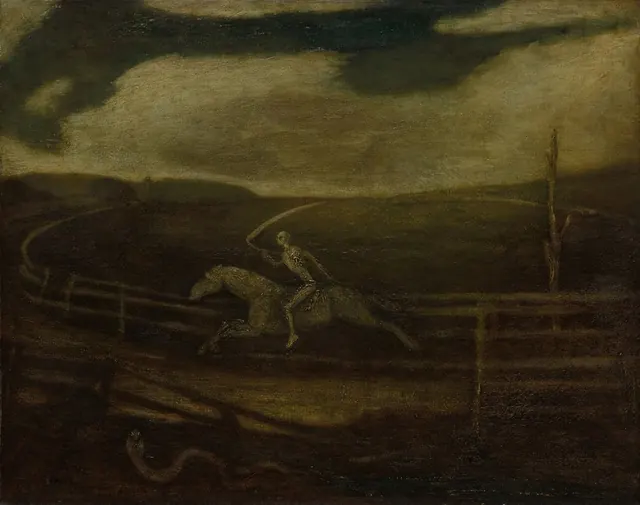
A friend of Ryder's lost a large wager on a horse race and died by suicide. The painter transformed the event into a skeletal rider carrying a scythe. Medieval imagery of death and temptation entered a modern story of gambling. Ryder worked on the painting for years and was reluctant to part with it.
A pale rider circles the track on horseback. The skeleton and scythe connect the figure with the traditional personification of Death.
Curving rails define the racecourse. Their enclosed turn preserves the specific setting of the event that prompted the painting.
A dark cloud crosses the sky. Broad color masses establish the setting without a detailed account of the weather.
A bare tree stands near the edge. Its thin silhouette remains conspicuous in a landscape with few objects.
Low hills recede behind the rider. Small differences among dark tones make the painting's depth visible.
Ryder repeatedly reworked canvases, sometimes applying paint before earlier layers had dried. This contributed to their physical fragility. The long making of this work reflects both its personal subject and his habitual practice of revision.
- Medium
- oil on canvas
- Collection
- Cleveland Museum of Art
- Dimensions
- Unframed, 70.5 × 90 cm
- Accession number
- 1928.8
Sources
Image provided under CC0. Image licence