The Adoration of the Magi
Sandro Botticelli · c. 1478/1482
Explore the painting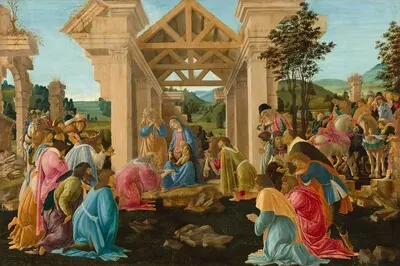
Botticelli probably painted this version during his Roman work for Pope Sixtus IV. The Holy Family occupies classical ruins, a setting associated with Christianity's emergence within the pagan world. Devotional gestures are especially prominent in this treatment of the visiting Magi.
The Virgin and Child sit beneath the roof. Their position joins the directions of worship coming from all sides.
A blue-clad figure bends low on the knees. The depth of the bow is conveyed by the whole body's position.
A richly dressed visitor kneels at the right. His clothing preserves his rank within the shared act of devotion.
Exposed roof beams form a triangle. Their architectural drawing directs attention toward the group below.
Classical ruins stand behind the crowd. The museum relates them to Christianity emerging within the earlier pagan world.
In 1481 Botticelli was called to Rome to work in the Sistine Chapel, painting scenes of Moses, Christ's temptations, and papal portraits. The proposed connection of this Adoration with that period places the small painting alongside a major papal commission.
- Medium
- tempera and oil on poplar panel
- Collection
- National Gallery of Art, Washington
- Dimensions
- Painted surface, 68 × 102 cm
- Accession number
- 1937.1.22
Sources
Reproduction of a public-domain artwork. Image licence